Bread
Homemade Butter Croissants Recipe (Flaky, Bakery-Style)
By Trevor Farias · Updated · About 15 hours total · 12 croissants
Loading ratings…
In a nutshell
Homemade croissants are made by wrapping a thin slab of cold butter in a lightly sweetened yeast dough and rolling and folding it three times, chilling between folds, to build dozens of alternating layers of dough and butter. The laminated dough is rolled 1/4 inch thick, cut into long triangles, rolled up, and proofed at cool room temperature until jiggly and doubled. Brushed with egg wash and baked at 400°F, the water in the butter turns to steam and puffs the layers into a crisp, shattering crust with a soft honeycomb interior.

Croissants have a reputation as the hardest thing a home baker can make. They do take time, but almost all of it is waiting in the refrigerator. The real work is about an hour of rolling spread over two days, and the reward is a croissant that shatters when you bite it and smells of browned butter, better than most bakeries sell.
This recipe uses a straightforward schedule: mix the dough in the evening, lock in the butter and do three simple letter folds the next morning, then shape, proof and bake by lunchtime. There are no special tools beyond a rolling pin, a ruler and a cool kitchen.
The one thing that matters most is temperature. The butter and dough need to be cold but pliable at the same time, so they stretch together into thin layers. I explain exactly what that feels like below, and what to do if the butter starts to crack or melt.
Why this recipe works
- An overnight rest in the refrigerator relaxes the gluten so the dough rolls out without fighting back and develops flavor.
- Three letter folds create 27 butter layers in the dough, which is the right balance of flake and honeycomb for a home oven.
- European-style butter with 82% or more butterfat is more pliable when cold and contains less water, so layers stay distinct.
- Proofing below 78°F keeps the butter solid, so the croissants rise from yeast first and then puff from steam in the oven.
Ingredient notes
Use a European-style or cultured butter such as Plugrá, Kerrygold or President. American butter works but contains more water and turns brittle when cold, which makes it more likely to break into pieces during rolling. All-purpose flour gives a tender croissant; bread flour makes it chewier and harder to roll.
Whole milk adds tenderness and helps the croissants brown. Instant yeast can be mixed straight into the flour.
Keeping the butter and dough at the right temperature
The butter should bend without cracking and the dough should feel cool, like the butter. If the butter snaps when you press the dough, let the package sit at room temperature for 5 to 10 minutes. If butter starts to show through or the dough feels greasy and soft, wrap it and refrigerate for 20 minutes before continuing. Always chill for at least 30 minutes between folds.
Work on a cool counter, dust lightly with flour, and brush off excess flour before each fold so the layers stick together.
How to tell when croissants are proofed
Properly proofed croissants have roughly doubled, look puffy, and wobble like jelly when you gently shake the pan. You should be able to see the individual layers along the sides. Under-proofed croissants leak butter in the oven and bake up dense; over-proofed ones collapse. At 75°F this takes 2 to 3 hours.
How to store butter croissants
- Keep croissants in a paper bag at room temperature for up to 2 days. Refresh in a 350°F oven for 5 minutes.
- Freeze baked croissants for up to 1 month. Reheat from frozen at 350°F for 10 minutes.
- To bake fresh in the morning, freeze shaped, unproofed croissants on a tray, then bag them. Thaw overnight in the refrigerator and proof 2 to 3 hours before baking.
Variations to try
- Pain au chocolat: cut the dough into 4-by-5-inch rectangles, lay two chocolate batons across each and roll up.
- Almond croissants: split day-old croissants, fill with almond cream, top with sliced almonds and bake at 350°F for 15 minutes.
- Ham and cheese: lay a thin slice of ham and Gruyère on each triangle before rolling.
Frequently asked questions
- Why did butter leak out of my croissants in the oven?
- A small amount is normal. A large puddle means the croissants were under-proofed or proofed somewhere too warm, which melted the butter. Proof until they are jiggly and doubled, below 78°F.
- Can I make croissants with regular butter?
- Yes, but it is harder. American butter is more brittle when cold and more likely to crack into pieces. Let it warm slightly so it bends, and work quickly.
- Why are my croissants dense inside?
- The butter melted into the dough during rolling, or the croissants were not proofed long enough. Keep everything cold during lamination and give them the full proof.
- How long do croissants take to make?
- About 15 hours from start to finish, but only about an hour of that is hands-on. Most of the time is the overnight rest, chilling between folds and the final proof.
Recipe card
Homemade Butter Croissants Recipe (Flaky, Bakery-Style)
A step-by-step homemade croissant recipe: flaky, buttery French croissants with a honeycomb crumb, made with three simple folds. Clear timings, make-ahead schedule and troubleshooting tips.
By Trevor Farias · Updated
- Prep
- 1 hour active
- Cook
- 20 minutes
- Total
- About 15 hours
- Makes
- 12 croissants
Includes an overnight dough rest, chilling between folds and a 2 to 3 hour proof
Ingredients
For the dough
For the butter block
For the egg wash
Equipment
- Stand mixer with dough hook
- Rolling pin
- Ruler or tape measure
- Pizza cutter or sharp knife
- Pastry brush
- 2 rimmed baking sheets and parchment paper
Instructions
Make the dough (evening)
Combine the flour, sugar, yeast and salt in a stand mixer. Add the cold milk and softened butter and mix with the dough hook on low for 4 to 5 minutes until smooth; the dough will be fairly firm. Flatten it into a 1-inch-thick square, wrap well and refrigerate overnight, 8 to 12 hours.
Make the butter block
Place the cold butter between two sheets of parchment and pound it with a rolling pin to soften, then roll and fold the parchment into a neat 7-inch square. Refrigerate until firm but still pliable, about 30 minutes.
Lock in the butter
Roll the chilled dough into a 10-inch square. Place the butter block on it at a 45-degree angle, like a diamond, and fold the dough corners over the butter to meet in the center. Pinch the seams closed.
First fold
Roll the package into a long rectangle about 8 by 24 inches, keeping the edges straight. Brush off excess flour and fold it into thirds like a letter. Wrap and refrigerate for 30 minutes.
Tip: Roll with firm, even strokes from the center outward. If butter breaks through, dust the spot with flour and chill before continuing.
Second and third folds
Repeat the rolling and letter fold twice more, turning the dough 90 degrees each time so the open end faces you, and chilling for 30 minutes after each fold. After the third fold, refrigerate for at least 1 hour.
Roll and cut
Roll the dough into a rectangle about 10 by 22 inches and 1/4 inch thick. Trim the edges. Cut into long triangles with a 4-inch base, alternating directions along the strip; you should get 12 triangles.
Shape
Cut a 1/2-inch notch in the center of each base. Gently stretch each triangle to lengthen it, then roll it up from the base to the tip without pressing down. Place tip-side down on two parchment-lined baking sheets, spaced well apart.
Proof
Whisk the egg and milk and brush lightly over the croissants. Cover loosely and proof at cool room temperature, 70 to 77°F, until doubled and jiggly, 2 to 3 hours.
Bake
Heat the oven to 400°F (200°C). Brush the croissants with egg wash a second time. Bake for 18 to 22 minutes, rotating the pans halfway, until deep golden brown. Cool on the pans for 15 minutes before eating.
Notes
- Use European-style butter with at least 82% butterfat.
- Chill for 30 minutes between folds and whenever the butter softens.
- Proof below 78°F or the butter will melt out of the layers.
Nutrition (per serving, estimated)
| Calories | 370 |
|---|---|
| Fat | 22 g |
| Saturated fat | 14 g |
| Carbohydrates | 37 g |
| Fiber | 1 g |
| Sugar | 7 g |
| Protein | 6 g |
| Sodium | 400 mg |
| Cholesterol | 70 mg |
Serving size: 1 of 12. Nutrition is calculated from standard ingredient data and will vary with brands and substitutions.
Recipe from Trevor's Kitchen · https://trevorfarias.com/recipes/croissants
More recipes you might like
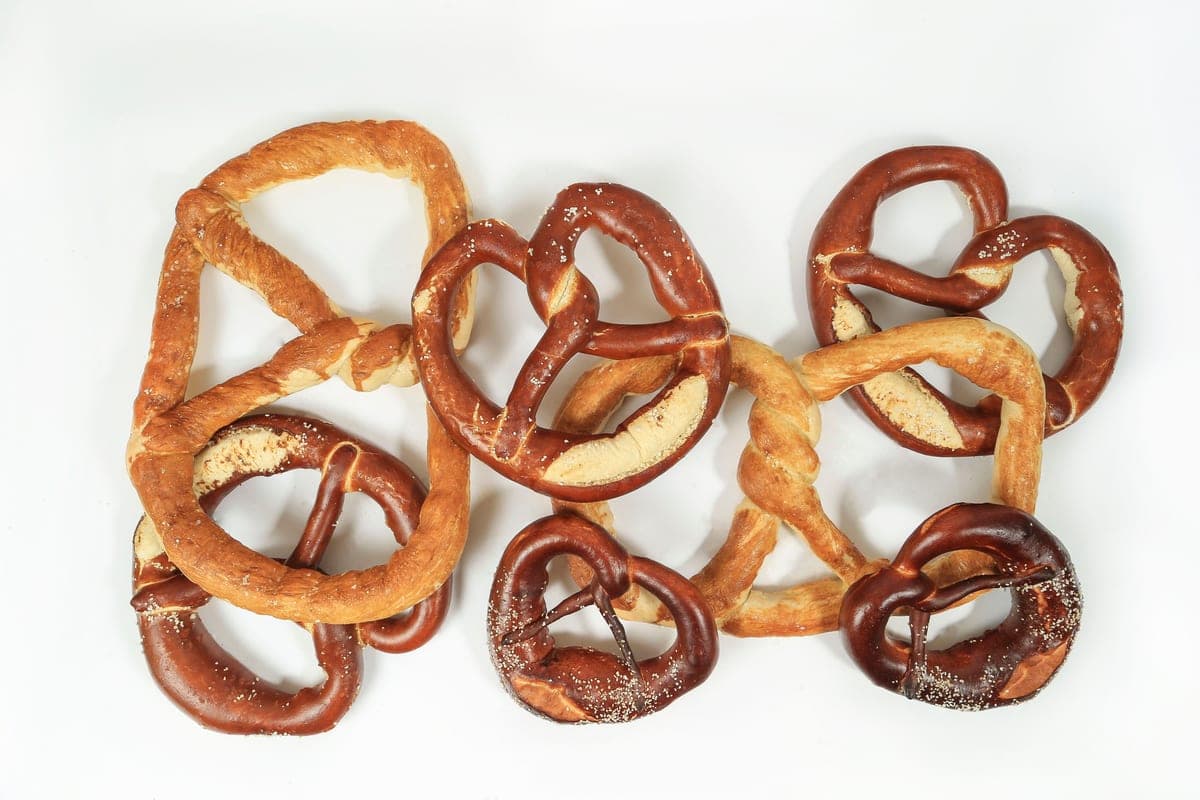
Bread
Authentic German Pretzels Recipe (Soft Bavarian Laugenbrezeln)
An authentic German pretzel recipe: soft, chewy Bavarian Laugenbrezeln with a deep mahogany crust, thin crisp arms and coarse salt.
- Total:
- 2 hours 15 minutes
- Makes:
- 8 large pretzels
Bread
Easy Sourdough Bread Recipe for Beginners (Step by Step)
The best sourdough bread recipe for beginners: 4 ingredients, no kneading, and a crisp crust with a soft, open crumb.
- Total:
- About 24 hours
- Makes:
- 1 round loaf (12 slices)
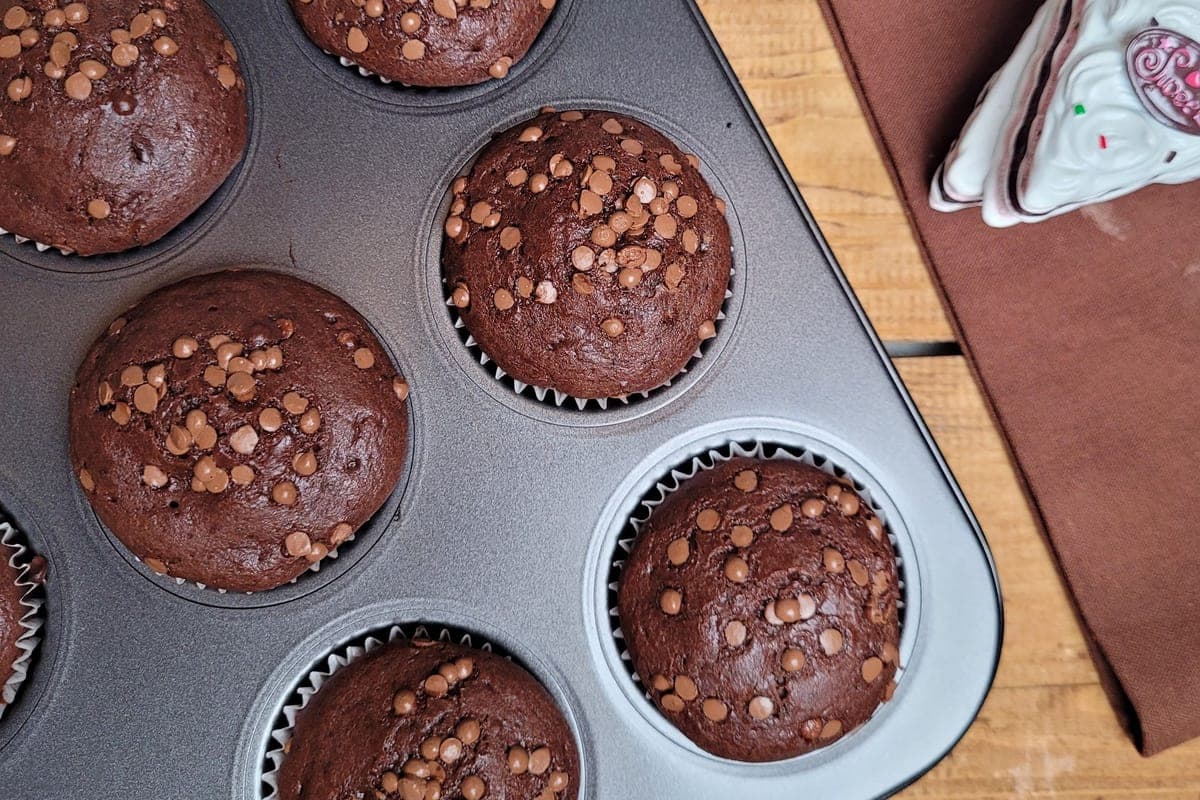
Muffins
Double Chocolate Muffins Recipe (Moist, Bakery-Style)
Moist double chocolate muffins with tall bakery-style domes, deep cocoa flavor and melty chocolate chips.
- Total:
- 37 minutes
- Makes:
- 12 muffins